1099 vs. W-2 in Construction: Who Is a Subcontractor and Who Is an Employee?
1099 vs W2 contractor in construction: learn when a worker is an employee or a subcontractor, what California requires and the mistakes that cost the most.
 By Armando Ehrenzweig11 min read
Contents
- 1099 vs W2 contractor: what each one means
- The IRS test: three kinds of evidence
- California: the ABC test in plain words
- Construction subcontractors in California: license and written contract
- W-9 and 1099-NEC: the paperwork for a real subcontractor
- Paying cash or "issuing a 1099 anyway" fixes nothing
- What happens if you classify someone wrong
- A 5-step routine before you pay anyone
- Frequently asked questions
- References
- The form decides nothing: W-2 and 1099 only report what already exists, and the working relationship is what makes someone an employee or a subcontractor.
- The IRS looks at three kinds of evidence (behavioral control, financial control and the relationship of the parties); no single one decides, and a contract is not enough.
- California's ABC test presumes a worker is an employee and you must prove three things; construction has special rules involving a license and a written contract.
- Before the first payment to a subcontractor, get a signed W-9, confirm their CSLB license and workers' comp, and sign a written contract.
- Paying cash or issuing a 1099 "anyway" does not change a worker's status; if you are unsure, talk to an employment attorney or a licensed CPA.
1099 vs W2 contractor: it is one of the first questions a construction owner faces when the crew grows. Do you put this person on payroll, or do you issue a 1099? It looks like a paperwork question, but it is really about how that person works with you. Here are the tests the IRS and California use, the paperwork a real subcontractor should give you and the mistakes that cost the most. I work with contractors in English and Spanish. This is educational information, not legal or tax advice.
1099 vs W2 contractor: what each one means
The W-2 is the form you use to report an employee's wages. The 1099-NEC is the form you use to report what you paid someone who is not your employee, such as a subcontractor. But the form decides nothing: the working relationship does. That is why "giving someone a 1099" does not make them an independent contractor.
| Employee (W-2) | Independent subcontractor (1099-NEC) | |
|---|---|---|
| Taxes on the pay | You withhold income tax and the employee's share of Social Security and Medicare | Usually nothing is withheld; the worker pays their own income tax and self-employment tax |
| Taxes on you | Your share of Social Security and Medicare, FUTA and California payroll taxes | No payroll taxes from the payer |
| Paperwork at the start | W-4 (and DE 4 in California) and I-9 | W-9 and, in California, a written contract |
| Year-end form | W-2 | 1099-NEC, if you reach the threshold |
| Workers' comp | Your responsibility as the employer | Their own business, if they are truly independent |
The IRS test: three kinds of evidence
The IRS does not use a checklist with an automatic answer. It looks at the facts of the relationship and groups them into three categories. No single one decides, and the IRS says a contract that calls the worker an "employee" or a "contractor" is not enough.
The IRS's three categories
- Behavioral controlDo you have the right to direct how the work is done, even if you never use it? More instructions and training point toward employee.
- Financial controlWho runs the business side? The worker's own investment in equipment, unreimbursed expenses and a chance of profit or loss point toward contractor.
- Relationship of the partiesThe contract, benefits such as insurance or paid leave, and whether the relationship is ongoing or for a single project.
If you still are not sure after reviewing these, the IRS offers Form SS-8, where the business or the worker can request an official determination. It can take months, so talk to a CPA first.
California: the ABC test in plain words
California is stricter. The law (AB 5, now in the Labor Code, sections 2775 to 2787) starts with a presumption: anyone who works for you for pay is an employee, unless you prove all three parts:
- A. The worker is free from your control and direction, both in the contract and in practice.
- B. The work is outside the usual course of your business.
- C. The worker is customarily engaged in an independently established business of the same nature as the work performed.
If any one fails, the worker is an employee. A contract that says "independent contractor" does not change that, and the independent business must actually exist when the work is done. For a construction company, part B is often the hardest, because field work is exactly what your business does. That is why California has special rules for construction subcontractors.
Also, each agency can use its own test (the IRS, the U.S. Department of Labor, California), and you can pass one and fail another.
Construction subcontractors in California: license and written contract
According to the EDD's information sheet for the construction industry (DE 231G), the more flexible Borello test can apply instead of the ABC test, but only if several conditions are met. They include a written subcontract and a current CSLB license that covers the work being done. EDD lists other conditions too, and if one is missing, the ABC test is what applies.
The same sheet warns that a contractor who hires someone without the license the work requires may be treated as that person's employer, and that each subcontractor needs their own license. It also explains that the real practices of the relationship weigh more than what the paperwork says.
The Labor Code exemptions have many conditions and they change. What you read here is general and educational: I cannot tell you how a specific worker must be classified, because it depends on the facts of your case. I am not an attorney or a certified public accountant (CPA). Before you decide, confirm the current rules on the official sites (EDD, DIR, CSLB) and talk to an employment attorney or a licensed CPA.
W-9 and 1099-NEC: the paperwork for a real subcontractor
Ask for a Form W-9 before the first payment. On it the subcontractor writes their name, business type and taxpayer identification number (TIN: an SSN or an EIN) and certifies that it is correct. You keep it; it is not sent to the IRS.
If they do not give you a TIN, or the IRS tells you the one you have is incorrect, you may have to apply backup withholding: holding back a percentage of the payment and sending it to the IRS.
Illustrative example of backup withholding
- 24%The withholding rate stated on the current Form W-9 when a payer must apply backup withholding.
- $2,400What you would have to withhold and send to the IRS if you paid a sub $10,000 and they never gave you a TIN (24% × $10,000).
Illustrative example with made-up numbers to show the arithmetic; confirm the current rate at the official source.
The 1099-NEC reports payments for services to someone who is not your employee. For payments made after December 31, 2025, the threshold is $2,000 (it was $600 before), and it may be adjusted for inflation starting in 2027. It goes to the subcontractor and to the IRS by January 31; confirm the exact date each year in the IRS instructions. California also has its own independent contractor reporting (EDD form DE 542): check edd.ca.gov for the dollar amount and deadline that apply.
Paying cash or "issuing a 1099 anyway" fixes nothing
Paying cash changes how the money reaches the person, not their classification. The IRS says the contract label is not enough: the real relationship counts. EDD says something similar: actual practices weigh more than the wording of an agreement.
These are common mistakes the IRS and California look at closely:
- Issuing a 1099 to someone who works on your instructions, your schedule and your tools.
- Skipping the W-9 and not keeping the sub's license and insurance on file.
- Paying cash with no record of how much, when and to whom.
- Starting with a written contract and leaving it in a drawer while the relationship works like an employee's.
On my TikTok (@armandoehrenzweig) I have videos about wrongly issued 1099s, in case you prefer a quick watch.
What happens if you classify someone wrong
The IRS explains that a business that misclassifies an employee can be held liable for that worker's employment taxes. In California, the Labor Commissioner can also impose civil penalties for willful misclassification (Labor Code section 226.8), and claims for wages, overtime and workers' comp can follow. The exact amounts and rules are in the law, and they change.
If you already issued 1099s and are not sure they were right, do not change paperwork on your own. Talk first to a CPA or a licensed employment attorney, who can explain options such as Form SS-8 or the IRS's voluntary program (VCSP).
A 5-step routine before you pay anyone
Before the first payment to a sub
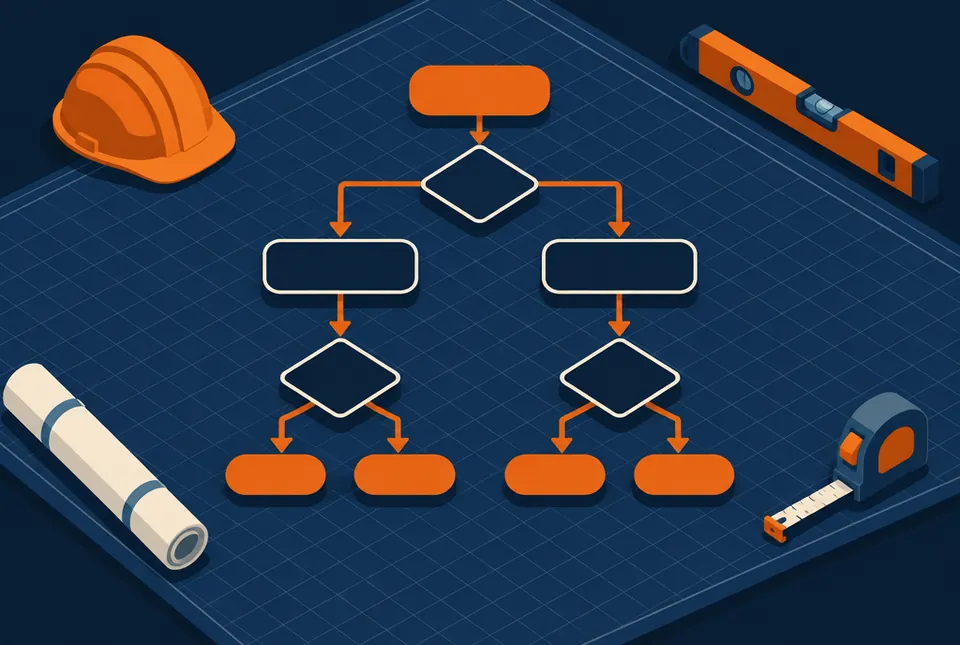
- Check that their CSLB license is current and covers the work
- Ask for proof of current workers' comp coverage (an insurance certificate) if they have employees
- Sign a written contract with scope, price and dates
- Keep their signed W-9 on file
- Log every payment to each sub during the year so you can prepare the 1099-NEC without a rush
Then, every so often, check that the relationship still matches what the paper says. For the other side of the coin, see how contractor payroll works and how to keep your books so you can see what each person really costs. If you want help putting this in order, see my services. And if you do not have your license yet, see how to get a California contractor license; for how these costs show up on your taxes, read about tax deductions.
Frequently asked questions
What is a subcontractor, and how is it different from a contractor?
The general contractor signs with the project owner; the subcontractor signs with the contractor and handles part of the job, such as electrical, roofing or drywall. Being called a "sub" does not decide whether someone is an independent business or an employee: that depends on how they work with you. In California, work that requires a license must be done by someone with a CSLB license.
Do I need a W-9 before paying a subcontractor?
Ask for it before the first payment. The W-9 gives you the sub's name and TIN so you can prepare the 1099-NEC. If a sub does not give you a TIN, or the IRS tells you it is incorrect, you may have to apply backup withholding. Keep the form in your files; it is not sent to the IRS.
Do I have to send a 1099 to every subcontractor?
Only when you pay for services to someone who is not your employee and you reach the threshold: $2,000 for payments made after December 31, 2025. The IRS instructions explain the exceptions. And remember: if the worker turns out to be an employee, having sent a 1099 does not fix the mistake.
Can I pay cash to someone who agrees to work as a 1099?
An agreement and a payment method do not decide classification. The IRS says the contract label is not enough, and in California it is up to you to show you meet the ABC test or the special construction rule that applies to you. If the person works like an employee, paying cash does not protect you and it leaves no record.
What should I do if I already issued 1099s and I am not sure they were right?
Do not change records from past years on your own. Talk first to a CPA or a licensed employment attorney. The IRS has options such as Form SS-8 (a status determination) and the VCSP program (Form 8952) to reclassify going forward, and each one has requirements worth reviewing with an expert.
References
- Independent Contractor (Self-Employed) or Employee?. IRS. https://www.irs.gov/businesses/small-businesses-self-employed/independent-contractor-self-employed-or-employee (accessed November 1, 2026)
- Form W-9, Request for Taxpayer Identification Number and Certification. IRS. https://www.irs.gov/pub/irs-pdf/fw9.pdf (accessed November 1, 2026)
- Instructions for Forms 1099-MISC and 1099-NEC. IRS. https://www.irs.gov/instructions/i1099mec (accessed November 1, 2026)
- ABC Test. California Labor and Workforce Development Agency. https://www.labor.ca.gov/employmentstatus/abctest/ (accessed November 1, 2026)
- Information Sheet: Construction Industry, DE 231G. California EDD. https://edd.ca.gov/siteassets/files/pdf_pub_ctr/de231g.pdf (accessed November 1, 2026)
Keep reading
 Payroll
Contractor Payroll 101: How to Pay Employees in a Construction Company
Contractor payroll made simple: set up new employees, know what gets withheld and who pays what, cover workers' comp and avoid the risks of paying cash.
10 min read Licensing
How to Get a Contractor License in California: Step-by-Step Guide
How to get a contractor license in California: who needs one, classifications, experience, exams, bond, workers' comp and current CSLB fees, in order.
10 min read Taxes
Tax Deductions for Contractors: 15 Write-Offs to Check Before Tax Time
Tax deductions for contractors explained: 15 write-offs to check, what is not deductible, how quarterly estimates work and the records you should keep.
11 min read